NAME Inspekzio sistemen integrazioa soluzio robotikoetan
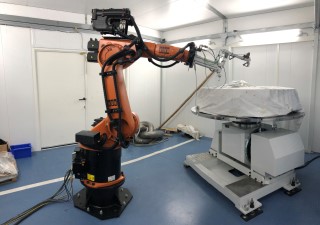
Fabrikazio sistema dinamikoetan, inspekzio sistema robotikoek piezen gainazalaren inspekzioa ahalbidetzn dute, inspekzio denborak murriztuz eta produkzioa handituz. Are gehiago inspekzioaren automatizazioak honen kalitatean eragina dauka, operario baten subjetibotasuna eskuz egindako inspekzio manual batetan zuzenean deuseztatuz. Inspekzio zelula termografia aktibora orientatuta dago. Kuka KR30-HA bat da bere elementu nagusia. Bere buruan bero iturri mota desberdinak jartzeko prestatuta dago, laserrean edota indukzioan oinarrituta. Bero iturriaz gain, kamera termografiko desberdinak jarri daitezke. Zentzu honetan guztiz moldakorra da, pieza mota oso desberdinak aztertu ditzakeelarik. Potentzia baxuko bi laser daude, bata 808 nm-koa eta bestea 1064 nm-koa. Bere ondasunen artean 3KW-ko indukzio generadorea dauka baita ere. Inspekzio ibilbideak Tebis CAD-CAM software-aren bitartez definitzen dira. Halaber, grabaketak prozesatzeko garatzen diren algoritmoak Python-en oinarritzen dira. Zelula TIC infraestrukturarekin osatu egin daiteke, komukatzeko eta informazioa jasotzeko plataforma logikoetatik. Informazio hay Big Data kontzeptuetan oinarrituta egon daiteke eta baita fabrikazio flexiblean ere. Konkretuki hurrengo elementuak integratu daitezke: • IOT komunikazio protokoloak: OPC-UA, MQTT y AMPQ. • Informazio trukaketa komunikazio protokolo industrialak erabiliz (Profibus, Profinet) edota M2M middleware bat instalatzen bada helburu horrekin (Apache Camel-en oinarrituta adibidez). Honek inspekzio zelula oso aktibo interesgarrian bihurtzen du, MES sistemetan integratzeko aukera ematen duelako fabrikazio maguko lineatan, zikloak eta baliabideak optimizatzeko. • Zuzenean database desberdinekin (SQL eta ODBC). Gainera, ezagutza zabala dago UltraSoinutan, inspekzio sistema bezala erabiltzen direnean bereziki. Araudiari dagokionez, inspekzio zelulak Klase 1 ko isolamenduko ziurtagiria dauka laserrak erabili ahal izateko. Ez du inongo problemarik sortzen ingurugiroari dagokionez ezta energía efizientziaren aldetik ere.
FIELDS OF APPLICATION
Quality control with robots
MOST OUTSTANDING EQUIPMENT AND COMPONENTS
-
8 axis robotic system
Kuka KR30HA (6 axes, high precisión and a máximum load of 30 Kg) together with a working table with 2 aditional axes (rotation and pitch).
-
itVis induction generator
itVis induction generator (3 kW) and adapted inductors for the inspection of components using active thermography (with the possibility to create new ones).
-
Lasers
Frankfurt Laser of 808 nm (50 W) and a Collimated laser of 1064 nm (10 W)
-
Software
Thermographic and monitoring software with the capability of storing process data as well as thermographic data for a posterior processing.
Tebis CAD-CAM software for the definition and optimization of the inspection trajectories.
-
Thermographic equipment
Thermographic cameras: Flir X6541sc (cooled and with a máximum framerate of 4000 Hz) and a Flir A655sc (microbolometric and with a maximum framerate of 50 Hz)
SERVICES OFFERED BY THE ASSET
Advanced Materials Inspection
Automatization of the inspection of composites in manufacturing processes and in the inspection of advanced materials employed in joining processes.
Collaboration and Coworking
Get industrial companies closer to the opportunities derived from the robotic technologies in what refers to inspection and quality control. New business oportunities. Collaboration with interntational networks known for their excellence.
Inspection in flexible manufacturing systems
Inspection in flexible manufacturing systems Consideration of inspection systems in: (i) Flexible manufacturing production and intelligent manufacturing. (ii) Production data handling in management software. (iii) Monitoring systems integrated in the production system with the aim of achieving unitary traceability.
Prototyping of Inspection Systems
Validation tests of real robotic inspection systems with the aim of getting information of the limiting parameters: sensibility, cycle time, etc. Prototyting and test under industrial conditions using new inspection technologies.
Training
Training of technicians and operators on the new robot based industrial inspection systems.
ENTITY MANAGING THE ASSET

Contact person:
Eider Gorostegui
egorostegui@lortek.es